
Pong MuseumHands-on table tennis
10 topics · 10 stamps · free entry!
Tear off your ticket – and the museum opens!
Table tennis you can touch: spin the ball, slice spin through the air, outsmart the pimples and be the umpire. Pong guides you through ten topics – each one has a stamp question for your pass.
Tap a topic. A red stamp shows where you have already passed the stamp question.
Spin means: the ball rotates while it flies. That changes its flight path, how it bounces on the table – and how it comes off your racket.
Topspin
Your opponent sends you a ball with spin. Set your racket angle: open (tilted back) or closed (tilted forward). Can you make three hits in a row?
Spin comes from friction: your racket brushes the ball instead of just hitting it straight. The thinner the contact and the faster your swing, the more it spins.
The table and your opponent are on the right. Take a backswing and swing through the ball.
No friction, no spin. A tacky, grippy rubber “grabs” the ball. Smooth, worn-out rubbers just slip off.
If the racket only grazes the edge of the ball (thin), almost all the energy turns into rotation. Hit it full (thick) and it turns into speed.
Spin comes from racket speed: legs, hips, arm and finally the wrist. Top players reach over 100 revolutions per second!
Complete the four stamp tasks above the table – the stamp is then awarded automatically.
Every rubber has tiny rubber pimples. On most rubbers they point inwards (smooth surface). When they point outwards, things get exciting: the ball suddenly does things you don’t expect.
Play a ball onto your opponent’s rubber and watch which spin comes back. Then decide how to play the second ball. Does it work if you just carry on as usual?
Table tennis rules aren’t hard at all. Get to know the table, keep score for a whole match and decide tricky situations as the umpire.
Remember: at least 11 points and a 2-point lead. There is no upper limit.
Tap “Point” when a player wins a rally. The machine shows you who serves and which rule applies right now.



Pong serves first. The serve changes every 2 points.

Answer at least 6 of the 8 umpire questions correctly.
Which stroke for which ball? The basic rule: watch how the ball comes – short or long, with which spin, how high. Then choose your stroke.
Club players in many countries have a rating: a number that shows how strong you are. It changes after every rated match. But careful – every country has its own system.
The Tischtennis-Rating works like chess Elo. The quarterly snapshot Q-TTR decides the order in team line-ups.
Every licensed player has points (from 500 upwards). Your classement is your points divided by 100. Gains and losses come from a fixed table.
USA Table Tennis uses a point-exchange table: the bigger the rating gap, the fewer points for an expected win – and the more for an upset.
Table Tennis England publishes ratings and rankings for its members based on league and tournament results.
The pros are ranked in the ITTF World Ranking (published by WTT) – based on results at international events.
Usually everyone who plays for a club in official leagues or tournaments. Casual games don’t count.
Simplified calculations to show the principle. Official values are calculated by each national federation – there are a few special cases (e.g. competition weightings in France).
 1350
1350Example values from the German TTR. A rough rule of thumb – other countries use different scales, and leagues differ from region to region.
The official platform of the German federation (DTTB): TTR value, history and matches after logging in.
mytischtennis.de ↗French players find their points in their licence area on the French federation’s website or in its official app.
fftt.com ↗Ratings and rankings for players registered with Table Tennis England.
tabletennisengland.co.uk ↗USATT members can look up their rating on the USA Table Tennis website.
usatt.org ↗Playing somewhere else? Ask your club – almost every federation has its own system.
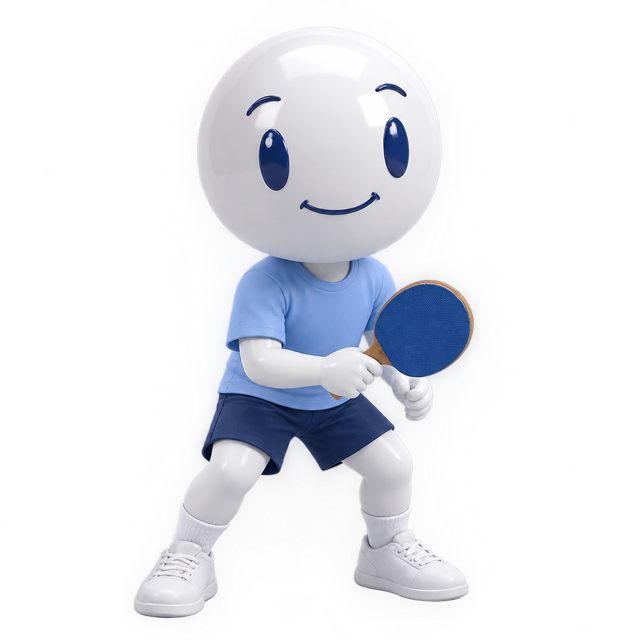
Not much to start with! Pack Pong’s sports bag for his first training session – but careful, not everything belongs in it.
Pack all six important things into Pong’s bag.
More expensive isn’t automatically better! A pro racket is very fast and hardly forgives mistakes. Move the price slider and see what changes.


| Supermarket | Beginner ready-made racket | Pro (custom-built) | |
|---|---|---|---|
| Price | €5–25 | €30–80 | €150–350 |
| Rubber | thin, smooth, not approved | ITTF-approved, soft sponge | top rubbers, thick sponge (2 mm+) |
| Speed | low | medium | very high |
| Spin | hardly possible | good | huge |
| Control | medium (but little feel) | very good | difficult for beginners |
| For whom? | pool, holidays, parties | beginners and new club players | experienced players with clean technique |
| Official matches? | ❌ usually not allowed | ✅ allowed | ✅ allowed |
There are lots of different playing styles in table tennis. Answer five questions and find out which Pong is hiding inside you!
Finish the test – whatever the result.
Table tennis is a fair game. A few unwritten rules simply belong to it – and make every match nicer.
All the important table tennis terms – short and simple. Start searching!
72 training cards for table tennis – free for everyone!
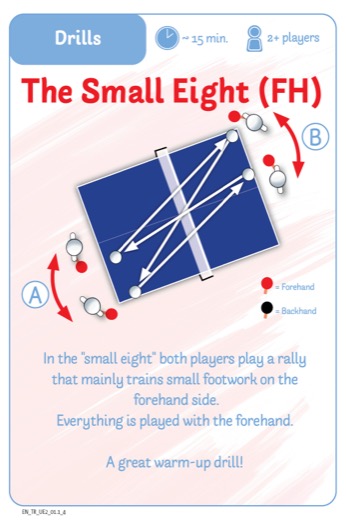
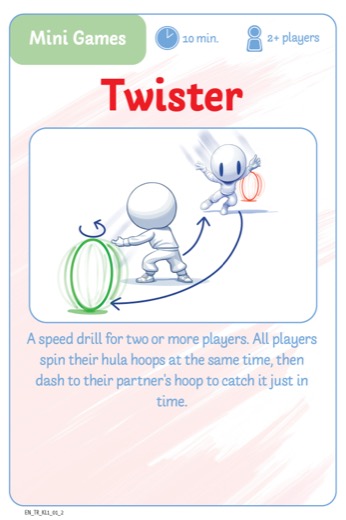
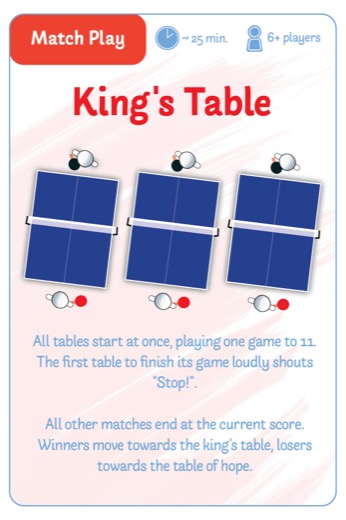
Short training reels, tips and drills all about table tennis – for kids, parents and coaches.
Follow @smashstarter instagram.com/smashstarterCollect all ten stamps and get your certificate as a table tennis expert!
Deletes all stamps, your certificate name and the torn ticket – only in this browser. The tour then starts again from the beginning.